

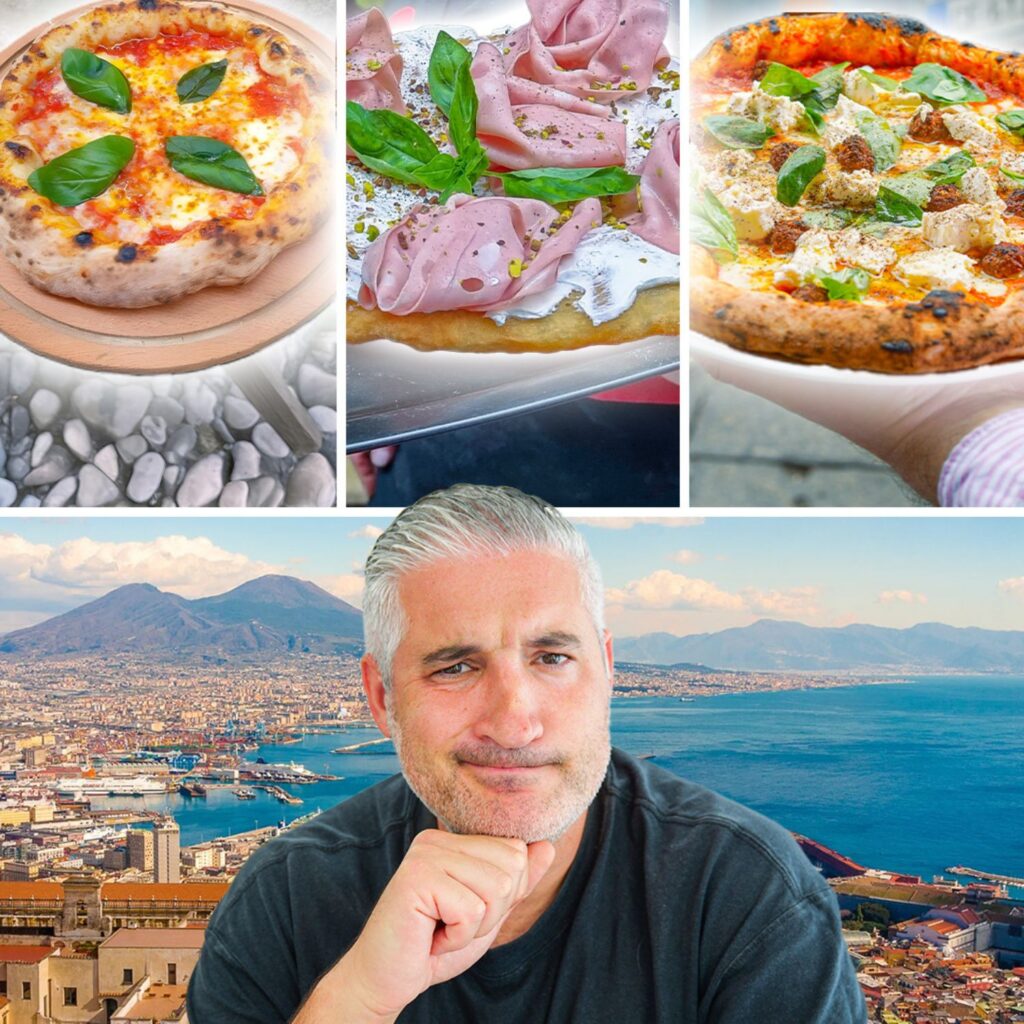
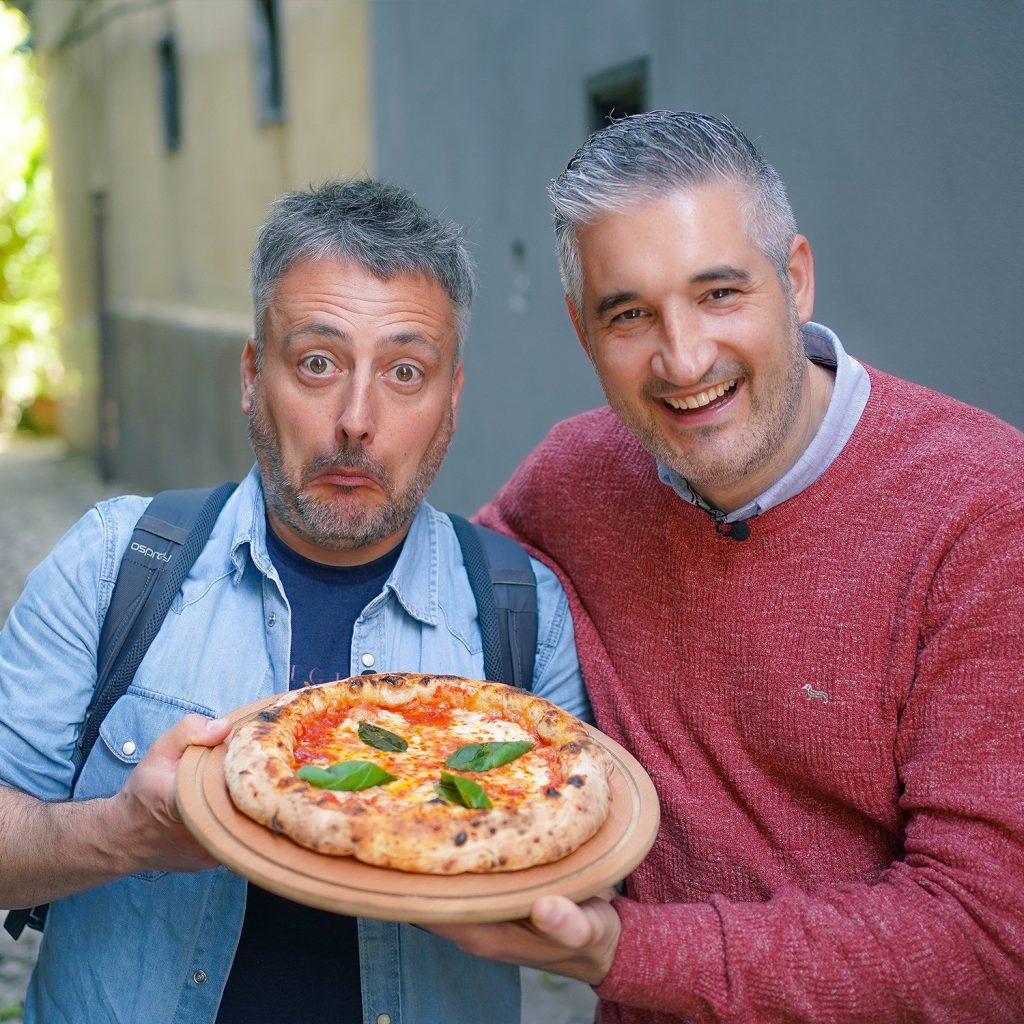
Pizza is Italy’s pride and the world’s obsession. But among billions eaten every year, only a few can truly be called the best. So I set off across Italy with pizza masters Gigio Attanasio, Vincenzo Viscusi and Antonio Pascarella to uncover three extraordinary pizzas. Each one is unique, creative, and worth the journey. Let me show you why.
Watch: I Traveled to Italy to Find the BEST PIZZA in the World!
Here are three of the world’s best pizzas, each one special in its own way.
The Best Pizza in the World #1: Pizzeria Carmnella, Naples
A Family Story
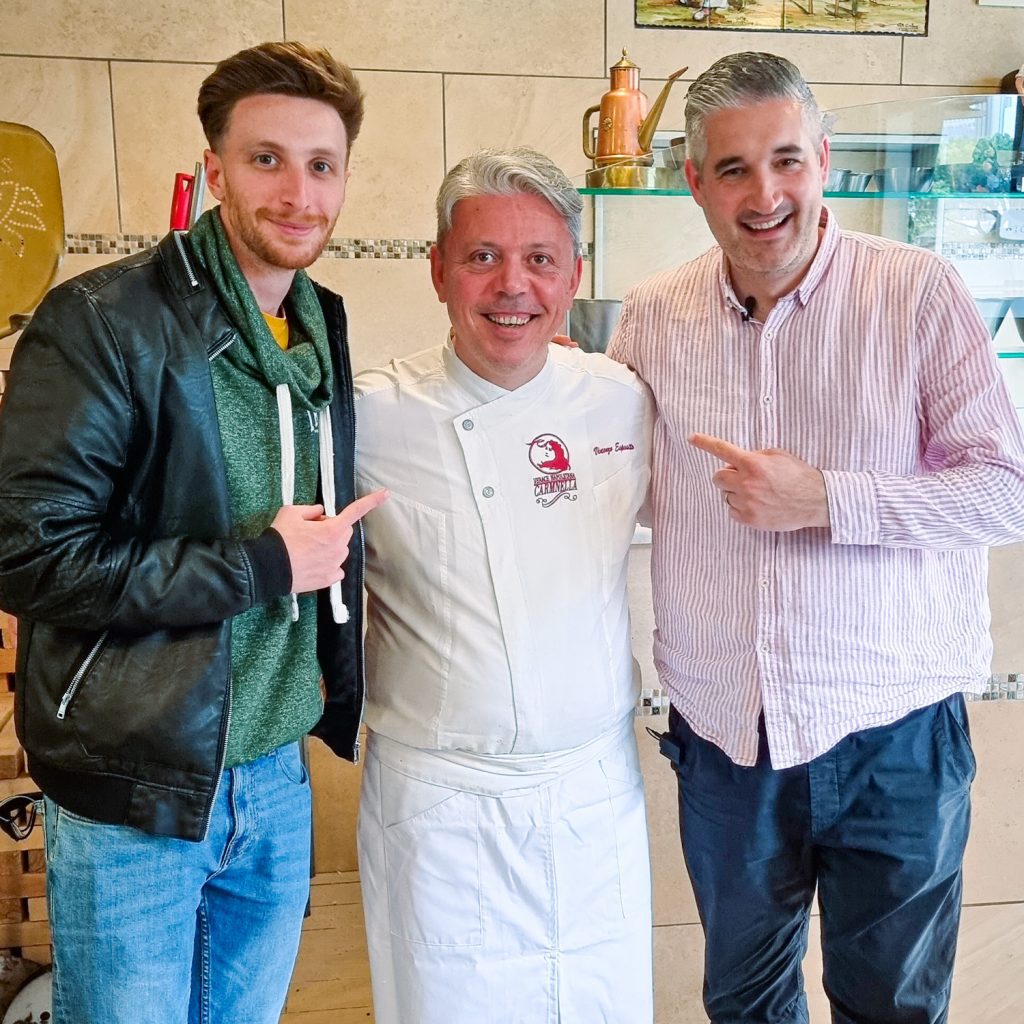
Just steps from Naples’ main train station, Pizzeria Carmnella has been drawing locals for decades. Today it is run by Vincenzo Esposito, the third generation to carry the torch. His grandmother, Carmela, opened the doors in 1982 and the place still bears her name. Back then, many of Naples’ pizzaioli were women, though today the field is mostly made up of males. Vincenzo continues his Nonna’s legacy with pride, bringing the same passion to every dough ball and every bake
What Makes Their Pizza Unique
What makes Carmnella so captivating is the way tradition is preserved in every detail. Vincenzo rolls his bases using an old one-hand technique, a gesture passed down from his grandmother that few chefs still practice. Even the way he portions dough is unique. Instead of round balls, he shapes them into rectangles, allowing twice as many to fit in a tray and giving him more control when it is time to stretch. The dough itself is never refrigerated. It ferments slowly at room temperature for at least eight hours, developing fragrance and elasticity. When it comes to baking, the pizzaiolo lets gravity help with the stretch and always returns the pizza to the exact same spot in the oven after rotating. This little ritual prevents scorching and gives the crust its signature puff and char.

Why Every Bite Feels Like a Masterpiece
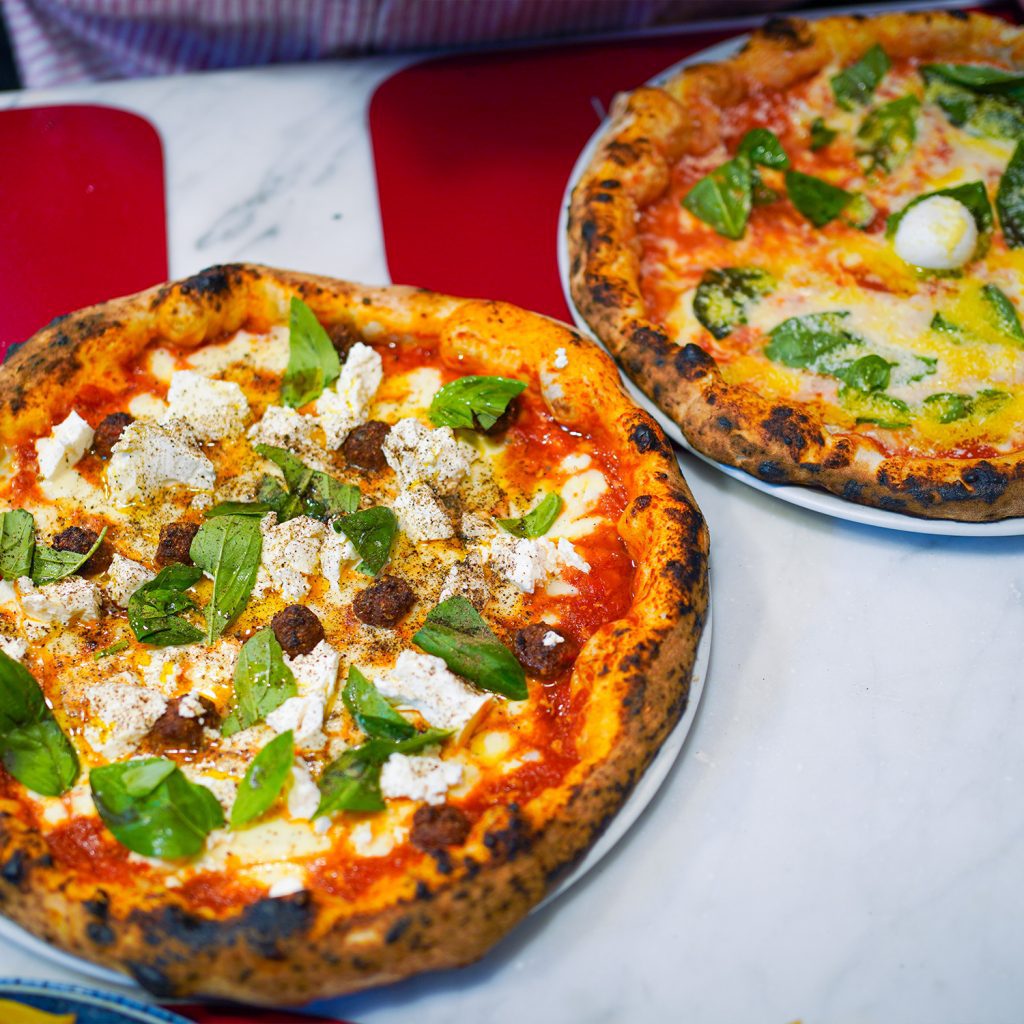
The first pizza we tried was the “Filetto”, a bright creation topped with cherry tomatoes from the slopes of Vesuvius, fior di latte, fresh basil and finished with sprinkle of Pecorino. There is no tomato sauce base, only the fresh ingredients layered directly onto the dough. The result is soft, fragrant and almost dream-like. Another pizza we tried was the Elena Ferrante, inspired by the famous Neapolitan writer. Imagine silky fior di latte and juicy mini-meatballs, finished with ricotta on top, black pepper and olive oil. The result feels decadent yet balanced, with toppings placed with care and dough that stays soft yet strong enough to hold it all. Carmnella’s pizzas bake in under 60 seconds at around 500°C, leaving the cornicione light and airy, the bottom blistered with leopard spots, and it leaves you craving the next slice before you finish the first.
The Best Pizza in the World #2: Pepe In Grani
A Pizza Pilgrimage in the Middle of Nowhere
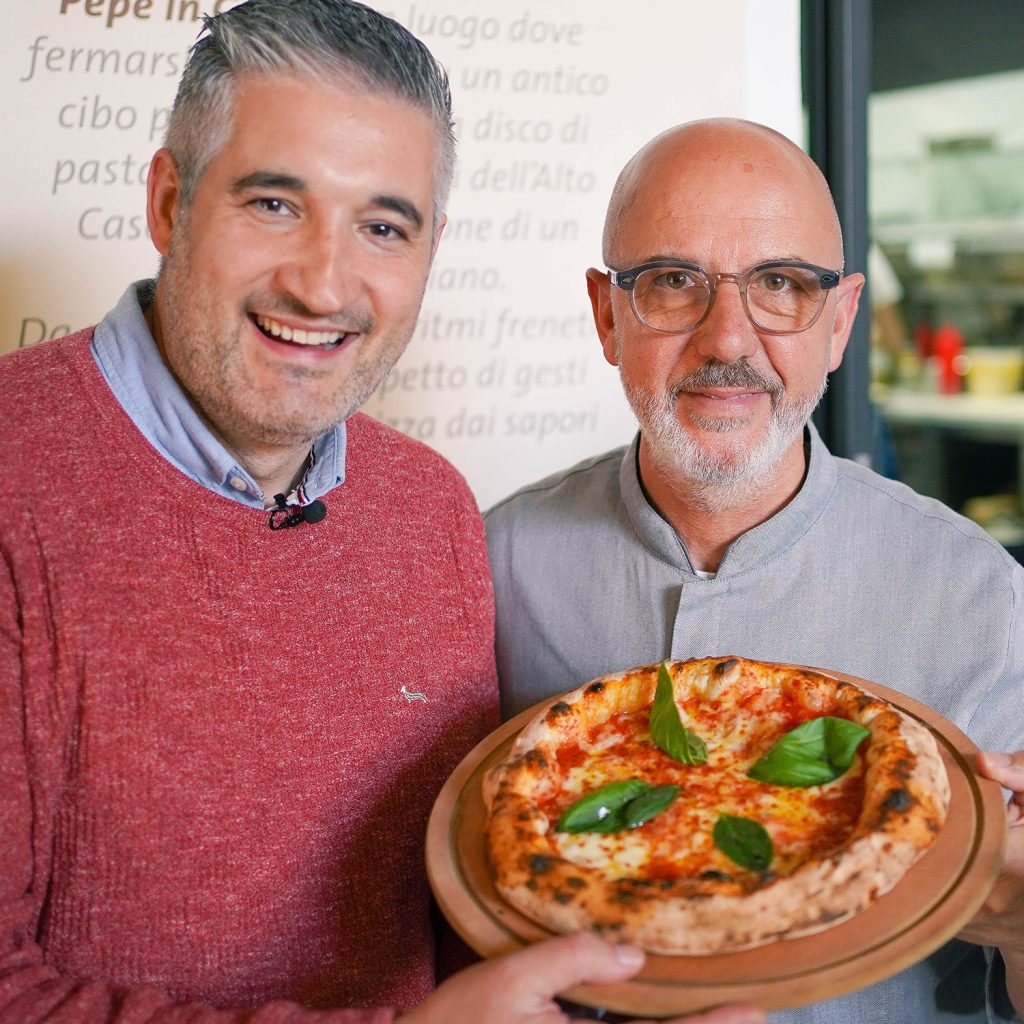
One hour outside Naples, in the quiet town of Caiazzo, stands Pepe in Grani, the pizzeria that turned a sleepy village into a destination for food lovers across the globe. Franco Pepe is the man behind it all, a master who respects local farmers, collaborates with top chefs, and invents daring new combinations of toppings, sometimes hot and cold together. He does not call his pizza Neapolitan. It is his own style, his own dough, his own rules. Eating here is more than a meal. From the starters to dessert, it feels like an immersion into Franco’s imagination, where every plate circles back to pizza. And yes, he even makes a pineapple pizza that even won me over!
The Secret to Great Pizza Starts with the Dough
Ask Franco Pepe what makes his pizzas special and he will tell you it begins with the dough. Each ball is carefully weighed depending on the pizza style, 200 grams for fried pizzas and 250 grams for the classics, because balance matters. Carbs, proteins and lipids must all be considered so that every slice feels light and digestible. The flour blend is his secret. Known as “O Pepe,” this dough blends three Italian grains and is reworked several times a year depending on the harvest. For Franco, the flour gives identity to the pizza, while the toppings are simply supporting actors.
He believes in not relying too much on technology, always seeking a balance between modern methods and tradition. The dough is kneaded by hand, because skipping this step would strip away the senses of touch, sight, and smell that guide a pizzaiolo. He monitors temperature and fermentation closely, rarely refrigerating the dough. He treats cold and heat like instruments, adjusting them according to the day. Every batch is alive, and Franco insists that a pizzaiolo must “listen with touch” to interpret it correctly.

When Creativity Meets the Oven
The pizzas themselves are where tradition and imagination collide. Take the Incorrect Margherita, which flips convention by layering mozzarella first and then topping it with a tomato sauce made from local curly tomatoes, finished with a vivid basil and olive oil purée. Or the Coastal Sensation, a fried pizza that defies expectations with anchovy, parsley, lemon zest and chili-tomato in the center, light, fresh, and impossible to put down. Another standout, La Scarpetta, reimagines the joy of wiping your plate clean after pasta with bread. The pizza arrives layered with mozzarella and cheese fondue, then topped with a compote of three cold tomatoes that deliver a powerful contrast.
And then there is the surprise: Franco’s hidden pineapple creation, Ananascosta. Franco tucks pineapple inside a fried scone-like pizza with prosciutto and a touch of licorice. It is bold, playful, and completely addictive. The kind of dish that makes even anti pineapple people like me smile.
Pepe in Grani’s pizzas speak through their dough, each one a story of its own. Crisp on the outside, cloud-soft inside, balanced to perfection, and finished with toppings that surprise the senses. It is no wonder that celebrities, chefs, and pizza pilgrims alike travel to Caiazzo just for a seat at Franco Pepe’s table.
The Best Pizza in the World #3: Pizza Fritta in Naples
A Tradition Proudly Carried by Women
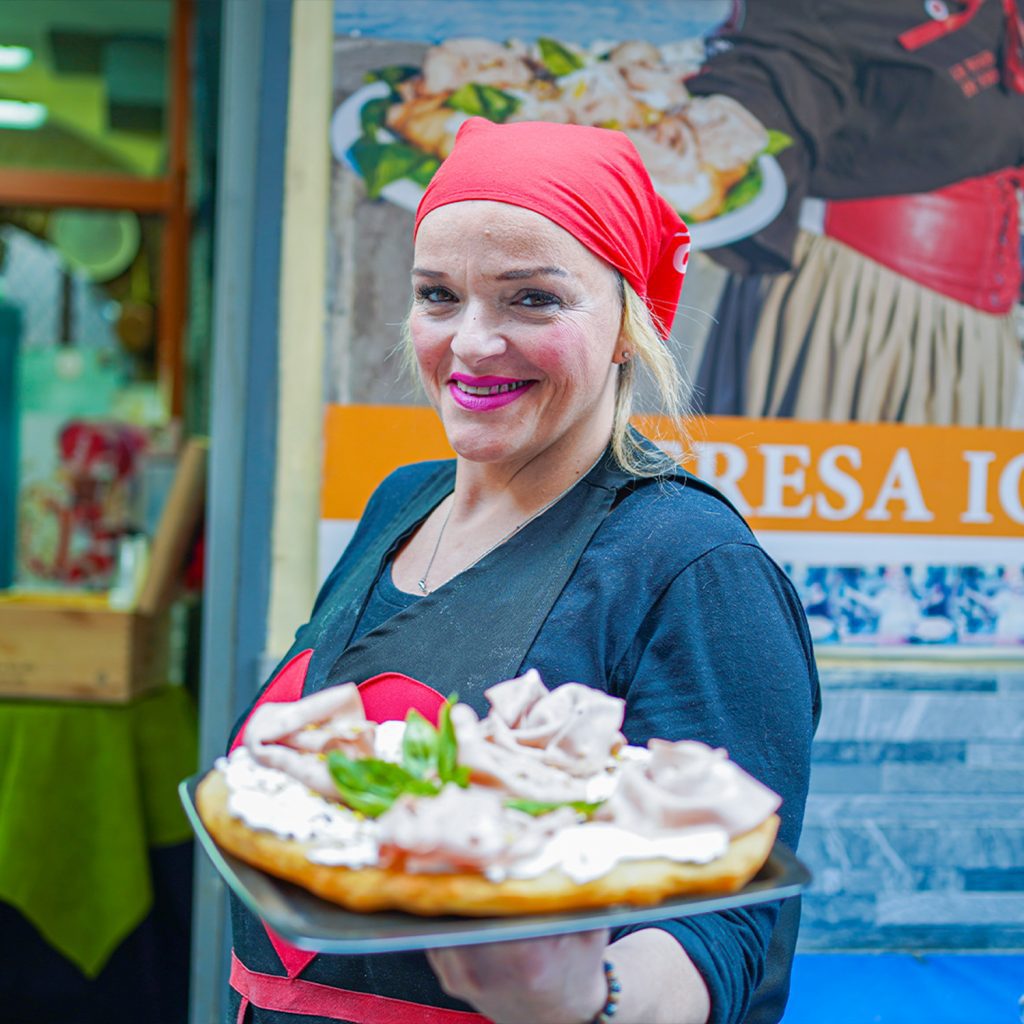
Fried pizza has its roots in the poorer areas of Naples, where women prepared it at home while their husbands worked. Back then, pizzaiolas were mostly female, and the tradition lives on through chefs like Teresa Iorio. Teresa has been making pizza since she was twelve years old, and her skills have earned her international recognition. She broke barriers as the first woman to win the World Pizza Championship, taking the crown twice and earning international legend status.
How Teresa Creates Her Masterpiece
At her pizzeria, Teresa affectionately calls her dough balls “beautiful babies.” She rolls them in semolina, stretches them with practiced hands, and folds them around a generous amount of provola cheese. Then she seals each parcel tightly to keep the filling inside, then drops it into hot oil. She flips it only once, spooning oil over the top until it puffs up, golden and crisp.
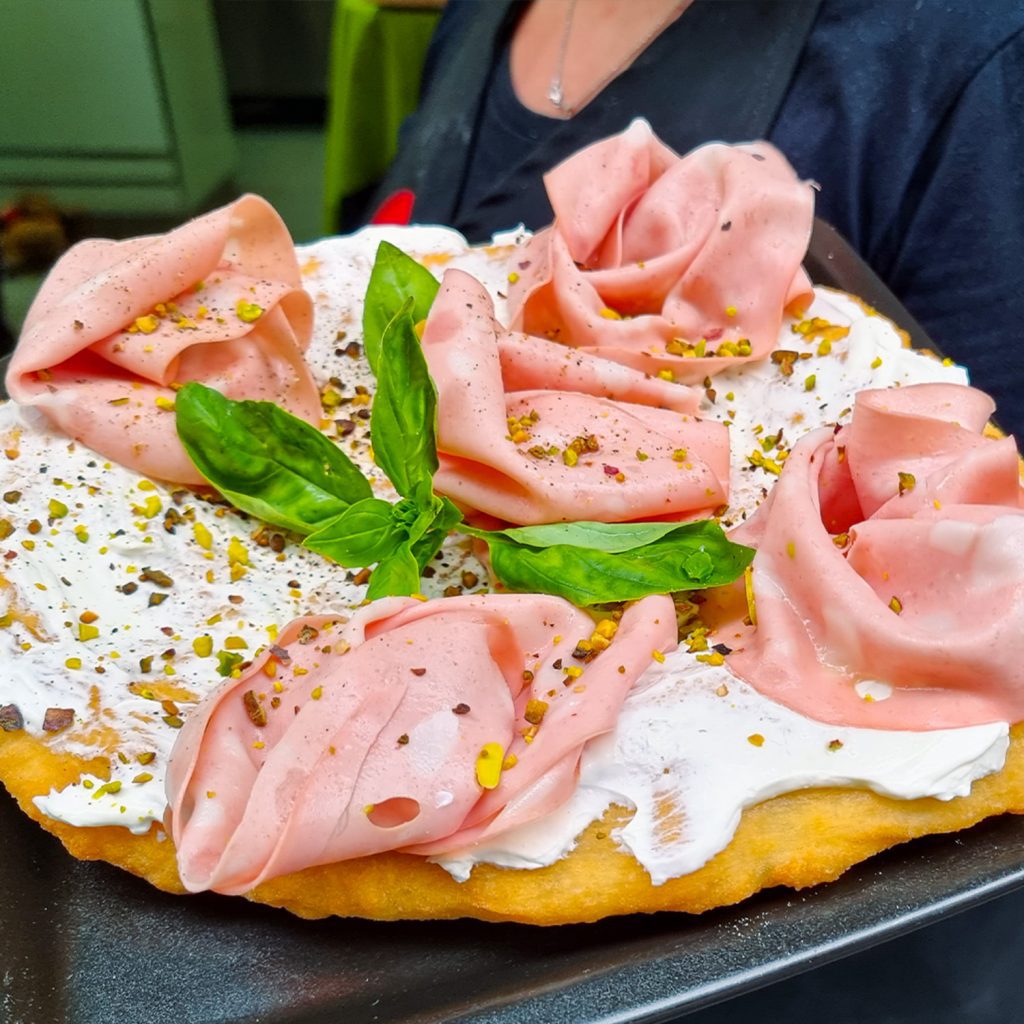
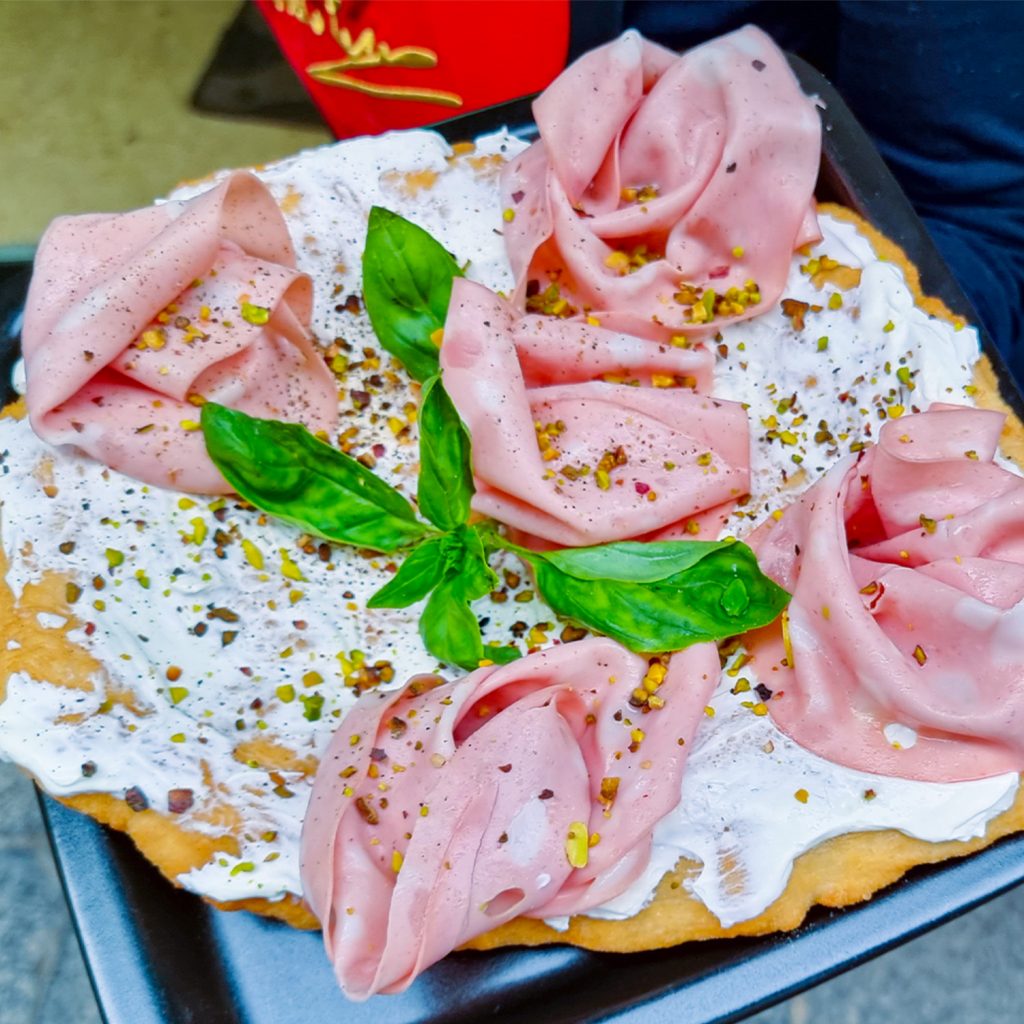
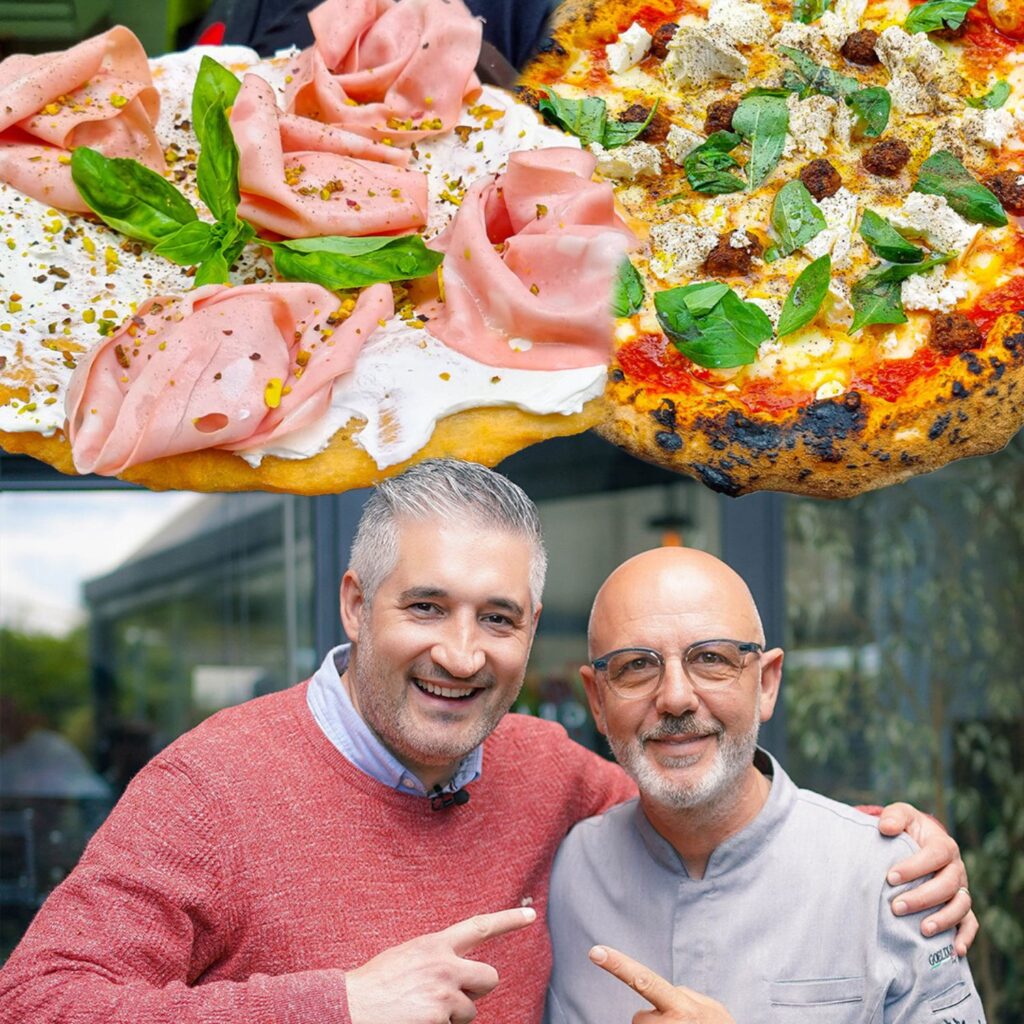
What follows is artistry. She crowns the fried pizza with a delicate spread of sheep ricotta, folds mortadella into rose shapes, scatters baked pistachios, and adds lemon juice, cracked pepper, and fresh basil. The fragrance alone is intoxicating, but the first bite seals it. Crisp on the outside, molten cheese inside, and layers of flavor that speak of Naples itself.
A Fried Pizza Like No Other
Forget the heavy fried foods you may know. Teresa’s pizza fritta is light, balanced, and layered with care. The ricotta is fluffy, the mortadella silky, and the lemon brightens each bite, cleansing the palate so you are ready for more. It feels indulgent but never overwhelming, a dish created with passion and love. “Do everything with passion and love, even your work,” she says, and every slice reflects that philosophy.
Eating Teresa Iorio’s pizza fritta is not just trying another version of pizza. It is a rite of passage in Naples. A dish rooted in history, refined by skill, and lifted by the pride of a pizzaiola who shows that great pizza has no limits.
Your Journey to the Best Pizza Starts Here
If you are a true pizza lover, you owe it to yourself to travel to Naples at least once in your life. The pizzas here are more than food, they are a cultural experience you will not find anywhere else. These three pizzerias are destinations in their own right, each worth the journey.
So tell me, which of the three would you visit first? Which one inspires you to pack your bags and taste it for yourself?
If you love learning Italian food secrets, don’t miss out! Subscribe to my YouTube channel and join our growing famiglia of food lovers.

Interested in Italy?
Join my private exclusive “Italy Unexplored Tour” and experience the real Italy, like you have never seen before!
This tour is exclusive to only 10 passionate foodies and is very unique.




Leave a Reply